


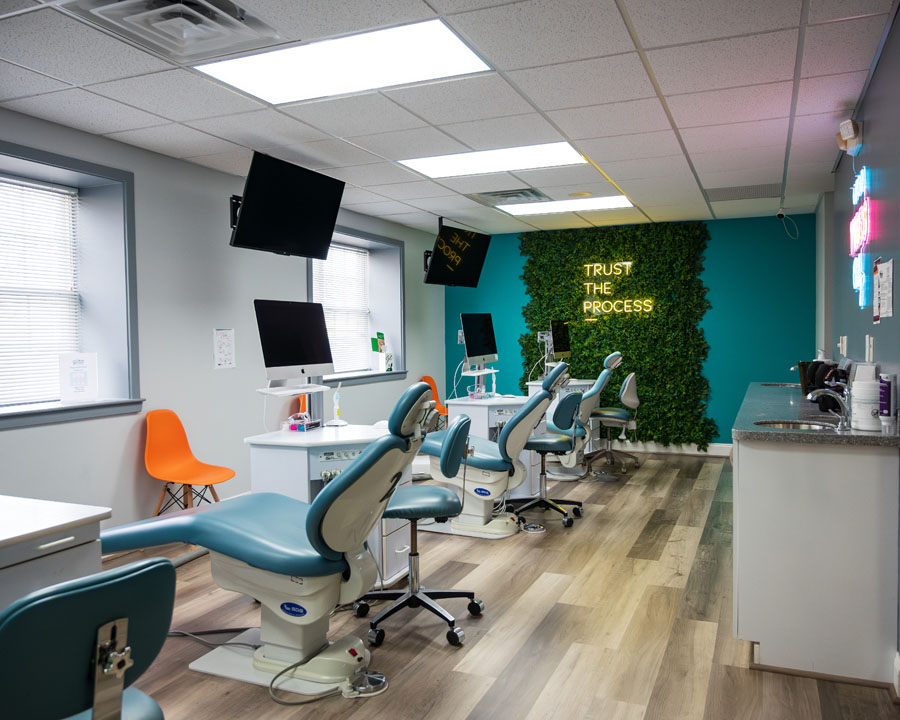
Your first orthodontic visit is an exam, not a procedure. Expect digital records, a look at how your teeth and bite fit together, a plain-English explanation of your options, and the cost in writing. Most visits take under an hour.
If you have never seen an orthodontist before, the unknown is usually the uncomfortable part. Below is exactly what happens at a first visit at Elite Orthodontics, in order, so nothing catches you off guard.
What actually happens during the appointment?
Check-in and health history
You will be asked about medical and dental history, any jaw pain or clicking, habits like thumb sucking or mouth breathing, and what bothers you about your smile. Completing your patient forms beforehand shortens this to a few minutes. If you have had recent dental X-rays, ask your general dentist to send them over; they are often reusable.
Digital records
Next come photographs of your face and teeth, a panoramic X-ray that shows the roots and any teeth still under the gums, and a digital scan of your bite. The scan replaces the old putty impressions, so there is no tray and no gagging. Records take roughly ten to fifteen minutes.
The clinical exam
The orthodontist examines how your upper and lower teeth meet, how much crowding or spacing you have, whether the midlines line up, and how your jaw joints move. In children, the exam also looks at how much growth is left and whether any permanent teeth are blocked or headed the wrong way.
The conversation
This is the part patients remember. You will see your own images on screen and hear what is happening, why it matters, and what happens if you do nothing. You should leave able to describe your bite in your own words.
How long does the first visit take?
Plan for about an hour from walking in to walking out. The breakdown looks like this:
| Stage | Roughly how long | What you are doing |
|---|---|---|
| Check-in and history | 5-10 minutes | Forms, questions, insurance details |
| Photos, X-ray, digital scan | 10-15 minutes | Sitting still; nothing invasive |
| Clinical exam | 10 minutes | Orthodontist assesses teeth, bite, jaw |
| Treatment discussion | 15-20 minutes | Options, timelines, your questions |
| Financial review | 10 minutes | Written estimate, insurance, payment options |
Will treatment start the same day?
Sometimes, and only if you want it to. When the records are clear and you are ready, appliances can often be placed at a follow-up scheduled soon after. There is no expectation that you decide on the spot, and nothing is placed without your consent and a signed financial agreement.
When waiting is the right answer
For children, the answer is frequently “not yet.” If key permanent teeth have not erupted, the best move is monitoring every six to twelve months at no charge until the timing is right. Starting too early can mean a longer overall treatment for no added benefit.
When starting sooner matters
Some situations do not improve with time: a crossbite that shifts the jaw, severe crowding that traps a permanent tooth, or a habit actively reshaping the palate. In those cases an early, limited phase of treatment can prevent a harder problem later.
What will I learn about my options?
Braces
Fixed appliances handle the widest range of problems, including significant rotations and bite correction, and they work without relying on you to wear anything. There are several types of braces, and the visible metal bracket is only one of them.
Clear aligners
Removable trays appeal to adults and older teens who want a discreet option and can commit to wearing them twenty to twenty-two hours a day. The consultation covers whether Invisalign can achieve your specific result, because not every case is a good aligner case.
Doing nothing
A legitimate option, and you deserve to hear it honestly. Mild crowding with a stable bite and healthy gums may simply need monitoring. The orthodontist should tell you which of your concerns are health issues and which are cosmetic preferences.
What does the first visit cost, and what about insurance?
Before you leave, you should have a written estimate covering the full treatment fee, what your plan is expected to cover, the down payment, and the monthly amount. Orthodontic coverage usually works as a lifetime maximum rather than an annual one, and many plans pay it out over the course of treatment. Bring your insurance card so the team can verify benefits while you are there. If you want to review the specifics first, the details are on the financial information page, and in-house payment plans are available so treatment is not gated on paying up front.
How should I prepare?
Bring
Your insurance card, a photo ID, any recent X-rays from your dentist, and a list of medications. If a child is the patient and a second parent shares decision-making, bringing them avoids repeating the whole consultation later.
Ask
Good questions: What is causing this? What happens if we wait a year? How long will treatment take, realistically? How many visits, and how far apart? What does retention look like when the braces come off? Who will I see at each appointment?
Do not worry about
Nothing at a consultation hurts. There are no shots, no drilling, and no commitment. Brushing before you come is appreciated but the team has seen everything, so a coffee on the way will not offend anyone.
What happens after the consultation?
The records review
If treatment is recommended, the plan is built from your scan and X-ray rather than from a template. That means a specific sequence: which teeth move first, whether any spacing needs to be created, how the bite will be corrected, and roughly how many visits it will take. You should be shown that sequence, not just a total number of months.
The start appointment
Placing braces takes about an hour and a half; delivering a first set of aligners takes less. Nothing is numbed because nothing is drilled. Expect general soreness for three to five days afterwards, manageable with soft food and over-the-counter pain relief, and expect to be shown how to clean around whatever has been fitted before you leave.
The visit rhythm
Most patients are seen every six to ten weeks. Appointments are short, usually fifteen to thirty minutes, and are used to change wires, check tracking, and confirm the teeth are where the plan says they should be. Missing them is the most common reason treatment runs long.
What if you have had orthodontic treatment before?
Relapse is common and treatable
Teeth that were straightened years ago and drifted after retainer wear stopped are one of the most frequent adult presentations. Correcting relapse is often shorter and simpler than the original treatment, because the bite foundation is usually still sound.
Bring what you have
Old retainers, previous X-rays, and any information about what was done before all help. Knowing whether teeth were extracted, and which ones, changes what is possible now, and it is not always obvious from an exam alone.
Expect a frank conversation about retention
If a result was lost once, the plan should address why. That usually means a bonded retainer behind the front teeth, a removable retainer at night, or both, and a clear statement that nightly wear does not have an end date.
What does treatment feel like week to week?
The first week of anything new is the hardest: pressure, tender teeth, and cheeks adjusting to hardware or trays. After that, discomfort clusters in the day or two after each adjustment and fades quickly. Most patients are eating normally within a week and forget the appliance is there for long stretches. Wax for braces, and switching aligners at bedtime, both take the edge off the transition.
Frequently asked questions
At what age should a child have a first orthodontic evaluation?
Around age seven, when enough permanent teeth are in for an orthodontist to spot developing problems such as crossbites, crowding, or blocked teeth. Most children evaluated at seven do not need treatment then; they need monitoring so treatment starts at the right moment.
Do I need a referral from my dentist?
No. You can schedule an orthodontic consultation directly. Many patients arrive on a dentist’s recommendation, but a referral is not required, and your dentist stays part of the picture for cleanings and general care throughout treatment.
Can I get treatment at any Elite Orthodontics location?
Yes. Records taken at one office are available at the others, so you can start at the Bowie office and be seen elsewhere if that fits your schedule better. Tell the front desk and they will coordinate it.
Ready to see where you stand?
A consultation gives you an answer, in writing, without committing to anything. Schedule a visit and bring your questions.