

Today’s braces come in several forms — traditional metal, ceramic, and self-ligating (including a gold self-ligating option) — each offering a different balance of appearance, comfort, and convenience while working toward the same goal: a straighter, healthier smile. At Elite Orthodontics, we offer all of these options so patients in Bowie, Washington, DC, and Glenn Dale can choose the appliance that fits their needs and lifestyle.
Traditional Metal Braces
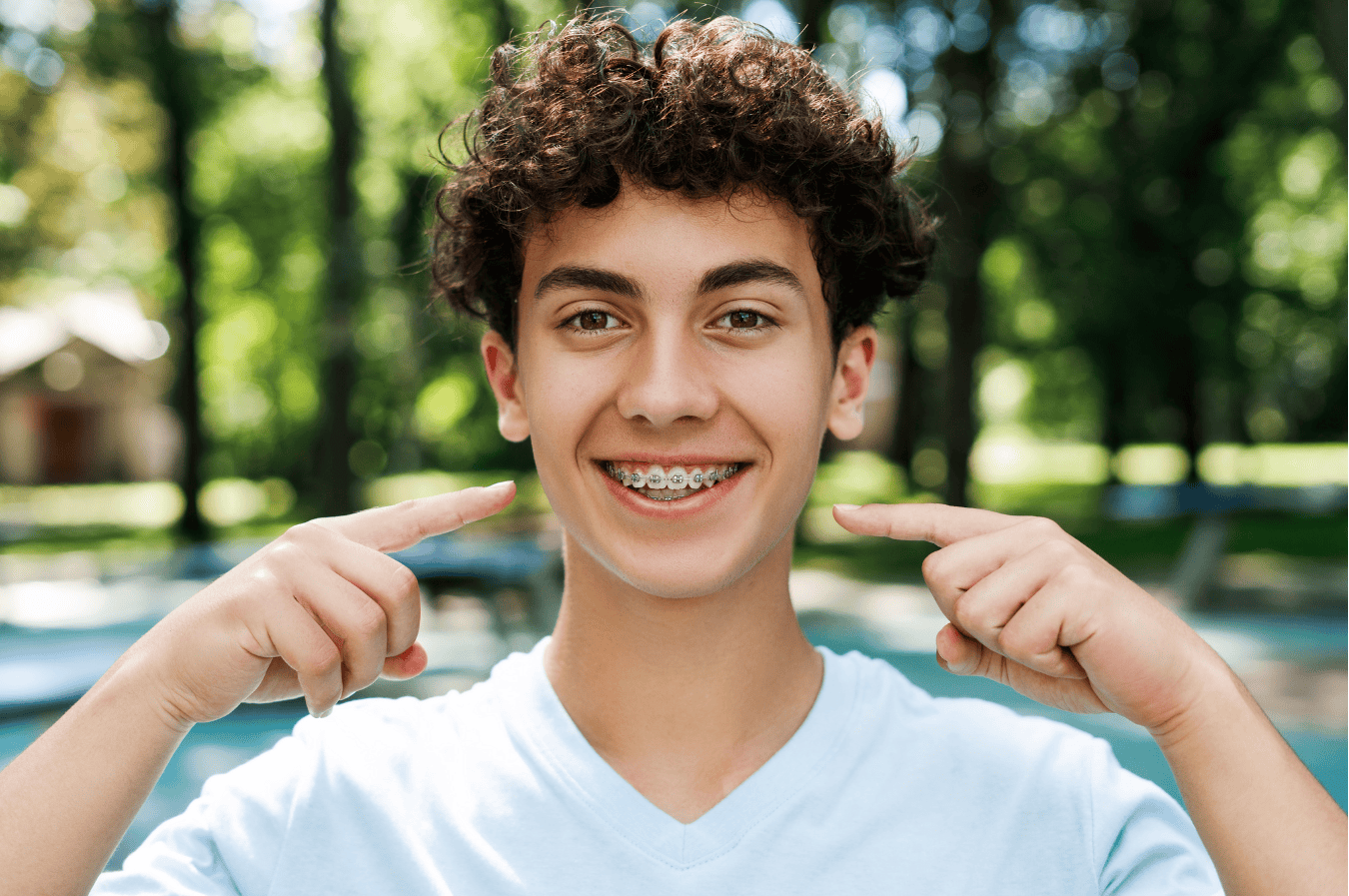
Traditional metal braces are the classic appliance that’s helped generations of patients achieve lasting results. Steel brackets are bonded to each tooth, a metal archwire runs through them, and small elastics fasten the wire to each bracket. Dr. Aliu adjusts the wire throughout treatment to keep steady, controlled pressure on the teeth. Patients can even color-coordinate their elastics for holidays or favorite teams. While metal braces are the most visible option, they remain a reliable, cost-effective choice, especially for more complex cases that benefit from precise control.
Because the brackets and wire stay in place continuously, metal braces are also one of the most durable options available, standing up well to the everyday wear of eating, talking, and typical activity. Most patients adjust to the feel of metal braces within the first week or two, after which the appliance becomes a normal part of daily life rather than something they think about constantly.
Ceramic Braces
Ceramic braces work the same way as traditional braces but use clear or tooth-colored ceramic brackets instead of steel, blending in much more with the natural tooth. They’re a popular choice for patients who want the results of braces with a more discreet look. The trade-off is durability — ceramic brackets are more prone to breakage than metal, so they tend to suit patients who will be a bit more careful with their appliance. Ceramic is a especially popular choice among teens heading into photo-heavy years and adults working in client-facing jobs, since the brackets are much less noticeable in everyday conversation and in photos.
Self-Ligating Braces
Self-ligating braces use a small sliding door built into the bracket instead of elastic ties, allowing the archwire to move with far less friction. Patients tend to appreciate that these brackets are easier to keep clean, have a sleeker profile than traditional brackets, and often mean quicker adjustment visits since there’s no need to replace individual ties. We go into more depth on how self-ligating brackets specifically compare to traditional ones in a dedicated guide, since the differences matter most for teens and adults weighing the two side by side.
Gold Self-Ligating Braces
For patients who want the performance of self-ligating brackets with a different look, we also offer a gold self-ligating option. It works exactly the same way as our standard self-ligating braces, just finished in gold instead of silver — a small but popular way for some patients, especially teens and adults, to add a bit of personality to their treatment. Gold self-ligating braces can also be worth asking about for patients with a known sensitivity to certain metals, since the finish differs from standard stainless steel brackets — though any concerns about metal sensitivity are always worth discussing directly with our team before starting treatment.
Clear Aligners as an Alternative
If brackets and wires aren’t the right fit for your lifestyle, Invisalign clear aligners are worth considering as well. They work differently from any of the braces above — using a series of removable, custom-fitted trays rather than a fixed appliance — and tend to suit patients with mild to moderate alignment needs who can commit to consistent daily wear. Unlike any of the fixed bracket systems above, aligners come out for eating and brushing, so there are no food restrictions and no extra effort required to clean around brackets and wires. The trade-off is that results depend entirely on wearing each tray as directed, which is why Dr. Aliu will always talk through your daily habits before recommending this route. We cover how that process works in more detail in our guide to what Invisalign is and how it works. We don’t currently offer lingual braces, which attach to the back of the teeth, but between the options above, most patients find an appliance that fits both their case and their comfort level.
Caring for Your Braces, Whichever Type You Choose
Regardless of which appliance you go with, a few habits matter across the board. Avoiding hard, sticky, and chewy foods protects brackets and wires from damage. Taking a little extra time to brush and floss around brackets and under wires helps prevent the buildup that can lead to staining or cavities during treatment. And keeping up with your regularly scheduled adjustment visits — along with your general dentist’s cleanings — keeps your treatment on track and your overall oral health in good shape while your smile straightens out.
Comparing Your Options at a Glance
| Type | Visibility | Durability | Best For |
|---|---|---|---|
| Traditional Metal | Most visible | Very durable | Complex cases, budget-conscious patients |
| Ceramic | Discreet | More breakage-prone | Patients wanting a subtler look |
| Self-Ligating | Sleeker than metal | Durable | Patients wanting easier cleaning, quicker visits |
| Gold Self-Ligating | Visible, stylized | Durable | Patients wanting self-ligating performance with a unique look |
| Invisalign | Nearly invisible | Removable, requires discipline | Mild-moderate cases, compliant wearers |
How to Choose the Right Type for Your Situation
The best appliance for you depends on your specific bite, your comfort with visibility, your budget, and how disciplined you’ll be about appliance care or wear time. Rather than guessing, the most reliable way to choose is a consultation, where Dr. Aliu can review your digital iTero scan and walk you through which options make sense for your case specifically.
It’s also worth thinking honestly about your day-to-day habits. If you know you’ll struggle to avoid hard or crunchy foods, traditional metal might outlast ceramic better over the course of treatment. If discretion matters most and your case is on the milder side, Invisalign or ceramic braces may be worth prioritizing. And if you like the idea of fewer, quicker adjustment visits, self-ligating brackets are worth asking Dr. Aliu about directly.
Frequently Asked Questions
Which type of braces works fastest?
Treatment speed depends more on the complexity of your case than the type of bracket, though self-ligating braces can sometimes mean fewer or quicker adjustment visits along the way.
Are ceramic braces as strong as metal braces?
Ceramic brackets are effective but more prone to chipping or breaking than metal, so they’re best for patients who can be a bit more careful with what they eat.
Can adults get any type of braces, or are some just for kids?
All of the options above are available to patients of any age. The right choice comes down to your case and preferences, not your age.
Do all types of braces cost the same?
Pricing can vary by appliance type and case complexity. We’re happy to go over the specifics for your situation during a consultation.
How do I know if I need braces at all, or if my case is too mild to bother?
Even mild crowding or spacing can be worth addressing for both appearance and long-term oral health, since misaligned teeth can be harder to clean thoroughly. An evaluation is the best way to find out whether treatment makes sense for your specific smile.
Can I switch appliance types partway through treatment?
In some cases, yes — for example, moving from Invisalign to braces if compliance becomes an issue. Switching between different types of fixed braces mid-treatment is less common but can be discussed with Dr. Aliu if circumstances change.
Are there braces designed specifically for younger kids versus teens?
The bracket types themselves are generally the same across ages, though treatment goals and timing can differ quite a bit between a seven-year-old in early intervention and a teenager in full comprehensive treatment. We go into the specifics for younger patients in our guide to signs your child may need braces.
What’s the biggest factor in choosing between these options?
For most patients, it comes down to a balance between how much visibility bothers you and how much care you’re willing to put into avoiding certain foods or maintaining a wear schedule. Everything else — cost, comfort, appointment frequency — tends to follow from that starting point.
Ready to find the right fit for your smile? Schedule a consultation with our team at Elite Orthodontics.